
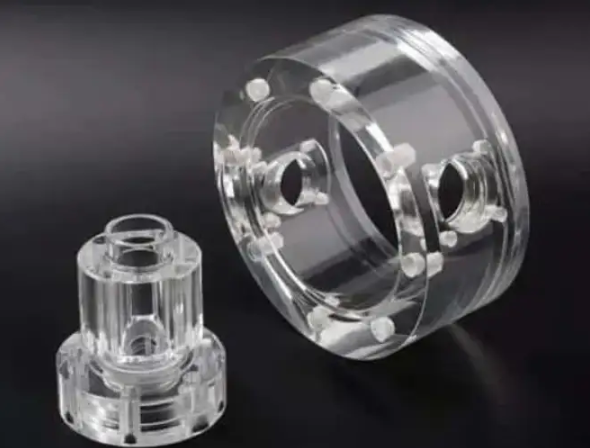
Injection moulding PMMA—better known as acrylic injection molding—is a go-to manufacturing method for brands that need high-clarity, scratch-resistant, and visually premium plastic components.
As industries push for cleaner optics, longer product life, and cost-efficient mass production, PMMA (Polymethyl Methacrylate) has grown into one of the most trusted engineering plastics for lighting, automotive, medical, and consumer electronics products.
This article breaks down how PMMA behaves in injection molding, the key process requirements, common challenges, and the industries that rely on acrylic molded parts every day. If you’re planning to manufacture high-quality transparent plastic components, this guide will help you understand why PMMA is often the best choice.
What Exactly Is PMMA for Injection Molding?
PMMA—commonly called Acrylic, Plexiglas, Acrylite, or Lucite—is a transparent thermoplastic known for its outstanding optical performance. It combines:
- Up to 92% light transmittance
- Excellent gloss and surface clarity
- Strong UV and weather resistance
- Stable dimensions and low shrinkage
- Good chemical resistance
Compared with glass, PMMA is lighter, easier to mold, and far more cost-effective in large-scale production.
Why PMMA Performs So Well in Injection Molding
- Optical Clarity Comparable to Glass
One of PMMA’s biggest strengths is its ability to deliver crystal-clear components. When molded correctly, acrylic parts appear clean, bright, and distortion-free—making them ideal for lenses, covers, and transparent housings.
- Naturally High Gloss Finish
Acrylic forms a smooth, glossy finish directly out of the mold. No polishing, no painting, and no extra coatings. This alone makes production faster and more economical.
- Excellent UV and Weather Resistance
PMMA resists yellowing and surface degradation better than most plastics. Outdoor lighting, automotive lenses, and signage products benefit greatly from this long-term stability.
- Good Mechanical Stability
Acrylic doesn’t warp easily, holds its shape, and maintains stable dimensions over time. This predictability is valuable for precision components.
- Lightweight Alternative to Glass
PMMA offers the clarity of glass while weighing about half as much. Manufacturers get strong, crisp-looking parts that don’t crack easily and cost less to ship.
Limitations of PMMA in Injection Molding
Although PMMA is a strong material, it’s not perfect. Understanding its limitations helps engineers design better parts:
- More Brittle Than PC or ABS
PMMA can crack under impact, especially where the design includes sharp corners or thin ribs. Rounded edges and uniform wall thickness reduce stress.
- High Melt Viscosity
It does not flow as easily as PP or ABS. To compensate, molders typically use:
- Higher injection pressure
- Optimised runner/gate design
- More robust venting
- Moisture Sensitivity
PMMA readily absorbs moisture. If not dried thoroughly, parts can show bubbles, hazing, and silver streaking.
- Risk of Thermal Degradation
If overheated, PMMA can burn and discolor. Strict temperature control is essential.
Partnering with a factory experienced in acrylic molding eliminates most of these issues.
Key Process Requirements for PMMA Injection Molding
- Drying the Material
PMMA must be dried before processing:
- 80–90°C for 2–4 hours
- Moisture content under 0.05%
Proper drying ensures clear, bubble-free parts.
- Melt Temperature
The recommended melt temperature range is:
- 200–250°C
This keeps the melt fluid and stable without causing thermal damage.
- Mold Temperature
Higher mold temperatures create better clarity and gloss:
- 60–80°C
A warmer mold reduces internal stress and improves surface quality.
- Injection Speed
Moderate injection speed is ideal. Too fast creates shear marks, while too slow increases weld lines.
- Cooling Control
PMMA cools slower than some engineering plastics. A controlled, even cooling cycle prevents warping, cracking, and shrink marks.
- Mold Design Considerations
For optical-grade PMMA parts, molds must include:
- Highly polished cavities (A1 mirror finish)
- Proper venting (0.03–0.05 mm depth)
- Smooth runners and gates
- Uniform wall thickness
These improvements increase clarity and eliminate internal stress.
Common Defects in PMMA Injection Molding and How to Prevent Them
- Bubbles/Void Formation
Caused by moisture or insufficient pressure.
Solution: Extend drying time and adjust packing pressure.
- Silver Streaks
Often caused by moisture or poor venting.
Solution: Improve material drying and mold venting.
- Stress Cracks
Internal stress occurs when cooling is uneven or corners are sharp.
Solution: Add fillets, redesign sharp edges, and maintain consistent mold temperature.
- Yellowing or Burn Marks
This happens when PMMA overheats.
Solution: Lower melt temperature and avoid long hold times in the barrel.
Where PMMA Injection Molded Parts Are Commonly Used
PMMA is known for its optical clarity and surface quality, so it’s widely used across precision industries.
- Automotive Lighting
- Car tail lamp covers
- Headlamp lenses
- Light guide plates
PMMA offers superior UV resistance and maintains clarity even after years of exposure.
- LED and Optical Components
Lighting manufacturers rely on PMMA for:
- LED diffuser lenses
- Light pipes
- Optical covers
- Display windows
The material ensures excellent brightness consistency.
- Medical Devices
Because PMMA tolerates disinfectants and has good chemical stability, it’s used in:
- Dental equipment covers
- Flow measurement devices
- Diagnostic device windows
- Consumer Electronics
PMMA’s premium look and durability make it popular for:
- Smart home device covers
- Display screens
- Transparent indicator windows
- Premium product housings
- Industrial and Home Products
Acrylic molded parts also appear in:
- Protective machine guards
- Bathroom accessories
- Display stands
- Appliance windows
Its balanced performance makes PMMA a versatile solution.
PMMA vs. Polycarbonate (PC): Which Should You Choose?
Both materials are transparent, but they serve different purposes.
| Feature | PMMA | PC |
| Optical clarity | ★★★★★ | ★★★★ |
| Impact resistance | ★★ | ★★★★★ |
| Scratch resistance | ★★★★ | ★★ |
| UV stability | ★★★★★ | ★★ |
| Cost | Lower | Higher |
Choose PMMA for optical performance and outdoor use.
Choose PC for impact resistance and demanding mechanical requirements.
How to Select a Trusted PMMA Injection Molding Supplier
When manufacturing optical-grade acrylic parts, the right factory makes all the difference. Look for suppliers that offer:
- Experience With Optical-Grade Molds
PMMA requires a mirror-polished mold for flawless clarity.
- Engineering Support
A good supplier should help refine part geometry, improve flow, and optimise gate locations.
- High-Precision Equipment
PMMA production benefits from:
- Closed-loop injection machines
- Hot runner systems
- Strict temperature control systems
- Quality Control Standards
Ensure they offer:
- Visual clarity inspection
- Dimensional measurement
- Stress testing
- Material verification
- Full Production Capability
From mold manufacturing to final assembly and packaging, end-to-end service reduces lead time and defects.
Final Thoughts
If your project needs transparent, glossy, and dimensionally accurate plastic components, PMMA is one of the best materials available. Acrylic injection molding offers:
- Glass-like clarity
- Excellent weatherability
- Attractive surface finish
- Reliable performance in mass production
Whether you’re developing lighting components, optical lenses, medical covers, or premium consumer electronics, PMMA provides outstanding value and durability. With the right molding partner, you can achieve consistent quality and scalable production at a competitive cost.