
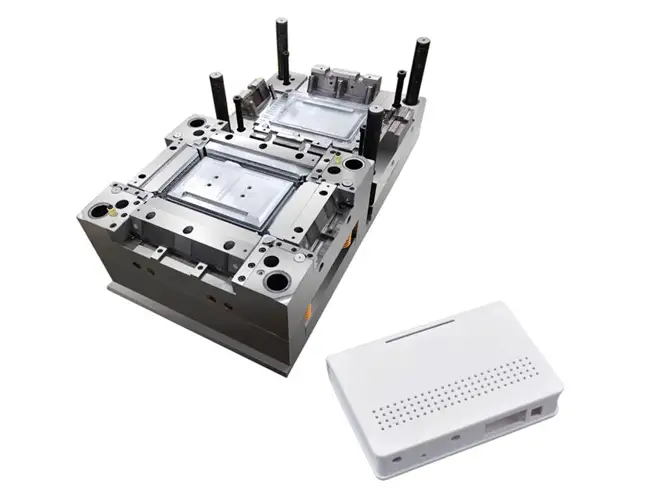
Low-volume injection molding solution has become one of the most flexible and cost-effective manufacturing solutions for companies that need plastic parts in small quantities without committing to expensive mass-production tooling.
Whether you’re developing a new product, validating a design, or producing customised components, low volume molding offers the speed, quality, and affordability that traditional injection molding struggles to deliver at small scales.
Today, startups, OEMs, engineers, and product designers rely on low volume injection molding for prototyping, pilot runs, bridge production, and customised manufacturing. This article explores what low volume injection molding is, how it works, its advantages, and how to choose the right supplier for your project.
What Is Low Volume Injection Molding?
Low volume injection molding refers to the production of plastic parts in quantities typically ranging from 10 to 50,000 units. Unlike traditional injection molding—which focuses on high-volume mass production—low volume molding is optimised for flexibility, faster turnaround, and lower tooling investment.
It is especially beneficial for:
- Prototypes and pre-production samples
- Market testing
- Pilot runs before mass production
- Custom parts and short-term product lines
- Replacement parts for legacy machinery
Low volume molding bridges the gap between rapid prototyping and full-scale injection molding, offering fast delivery without sacrificing part quality.
How Low Volume Injection Molding Works
The process is similar to conventional injection molding but adapted for smaller quantities and faster lead times.
- Design Review & Optimisation
Engineers evaluate your CAD model, checking for mouldability issues such as wall thickness, draft angles, undercuts, and flow paths. Adjustments may be recommended to reduce tooling cost or improve part performance.
- Tooling Fabrication
Low volume tools are usually made from aluminium, soft steel, or hybrid materials. These tools are cheaper and faster to produce compared to hardened steel moulds.
Advantages of aluminium tooling include:
- Lower cost
- Quicker machining
- Good heat transfer
- Ideal for testing and short runs
Though less durable than steel, aluminium moulds can still produce tens of thousands of high-quality parts.
- Material Selection
Low volume injection molding supports a wide range of thermoplastics, including:
- ABS
- PP
- PC
- Nylon
- TPE/TPU
- POM
- PMMA
- High-temperature engineering plastics
Material selection depends on the part’s mechanical strength, heat resistance, flexibility, appearance, and application.
- Injection Molding Production
Once the mould is installed in the machine, the molding process begins:
- Plastic pellets are heated into molten form
- The molten plastic is injected into the mould cavity
- The part cools and solidifies
- The mould opens and ejector pins release the part
Cycle times range from a few seconds to a minute depending on part thickness and size.
- Finishing & Quality Checking
Small-batch production often includes secondary services such as:
- CNC trimming
- Painting or coating
- Pad printing or laser marking
- Ultrasonic welding
- Assembly
A good supplier integrates inspection at every step to ensure stability and consistency.
Advantages of Low Volume Injection Molding
Low volume injection molding offers several unique benefits that make it ideal for early-stage and niche production.
✔ Lower Upfront Tooling Costs
Because the mould is simpler and made from softer material, tooling is significantly cheaper compared to full production tools. This makes it ideal for prototype validation or products with limited production quantities.
✔ Faster Turnaround
Tooling for low volume molding can be completed in 1–3 weeks, whereas high-volume steel tools may take 6–10 weeks. Faster tooling means faster market entry.
✔ High-Quality Parts
Unlike 3D printing or CNC machining, injection molding produces:
- Production-grade material properties
- Excellent surface finish
- Tight dimensional accuracy
- Consistency across all parts
This makes low volume molding ideal for functional testing and customer-ready products.
✔ Ideal for Product Development
Low volume molding is a perfect stepping stone between prototype development and mass production. It allows companies to:
- Test parts before full investment
- Validate designs in real-life environments
- Gather market feedback
- Refine product performance
✔ Flexibility for Customisation
Small batches allow you to update designs, change features, or adjust material during production. This flexibility is particularly useful for specialised industries such as medical devices and aerospace.
✔ Reduced Financial Risk
Because the initial tooling cost is low, companies can experiment with different designs or launch limited-edition products without large capital investment.
Applications of Low Volume Injection Molding
Low volume injection molding is used across nearly every major industry.
Product Development & Prototyping
- Design evaluation
- Functional testing
- Pilot production
Automotive
- Custom trims
- Interior components
- Low-demand replacement parts for legacy vehicles
Medical Devices
- Casings for diagnostic tools
- Engineering samples
- Short-run device components
Consumer Electronics
- Device housings
- Connectors and small structural parts
Industrial Manufacturing
- Jigs, fixtures, and specialised components
- Low-frequency replacement parts
Aerospace
- Lightweight components
- Test parts for performance validation
Because low volume molding offers high precision with low investment, it is widely used for innovation and short product cycles.
Aluminium vs Steel Tooling in Low Volume Molding
One of the biggest differences in low volume molding is the choice of tooling material.
Aluminium Moulds
Best for: 10–20,000+ parts
Pros:
- Lower cost
- Faster machining
- Better heat dissipation
- Great for prototypes and small production
Cons:
- Shorter tool life
- Not suitable for abrasive materials
Steel Moulds
Best for: 50,000+ parts
Pros:
- Extremely durable
- Supports high-temperature materials
- Ideal for long-term production
Cons:
- Higher cost
- Longer lead time
For most low volume projects, aluminium provides the best balance of cost, speed, and quality.
How to Choose a Low Volume Injection Molding Supplier
Selecting the right manufacturing partner can make or break your project. Consider the following:
- Engineering Support
A strong engineering team ensures your design is optimised and reduces the risk of defects.
- In-house Tooling Capabilities
Factories with in-house tooling offer faster turnaround and easier revisions.
- Material Expertise
Ensure the supplier can handle the resin your application requires.
- Quality Control Systems
Look for:
- CMM inspection
- Resin batch tracking
- In-process monitoring
- Short Lead Times
Low volume production is all about speed. Choose a partner who can deliver samples and production quickly.
- Secondary Operations
If you need assembly or finishing, a full-service supplier saves time and cost.
Conclusion
Custom low-volume injection molding is the perfect solution for companies that need high-quality plastic parts without the cost or commitment of mass production. With lower tooling investment, faster lead times, excellent material versatility, and production-grade results, it bridges the gap between rapid prototyping and full-scale molding.
Whether you’re preparing for a product launch, testing a new design, or manufacturing niche components, low volume injection molding ensures you can bring your product to market quickly, affordably, and with confidence.