
The global hospitality industry is rapidly embracing digital transformation, and digital menus have become one of the most influential technologies shaping modern restaurant experiences. What started as a simple alternative to printed menus has evolved into a comprehensive digital layer that connects design, performance, accessibility, and data-driven decision-making.
Today’s guests expect instant access to menus on their personal devices, regardless of location or network quality. Digital menu platforms are built to meet these expectations by prioritising fast loading speeds, responsive layouts, and mobile-first design. Lightweight architectures and optimised media ensure that menus remain usable even in environments with limited connectivity, which is essential for high-traffic venues and tourist destinations.
Design flexibility is a major advantage of modern digital menu systems. Restaurants are no longer limited to static layouts or costly redesigns. With mobile-optimised restaurant menu templates, businesses can adapt their visual presentation to different concepts, seasons, or branding updates without technical complexity. These templates balance aesthetics with performance, ensuring a smooth browsing experience for guests. Learn more about mobile-optimised restaurant menu templates for modern dining experiences that combine speed, usability, and adaptable design for restaurants of all sizes.
Learn more about mobile-optimised restaurant menu templates for modern dining experiences that combine speed, usability, and adaptable design for restaurants of all sizes.
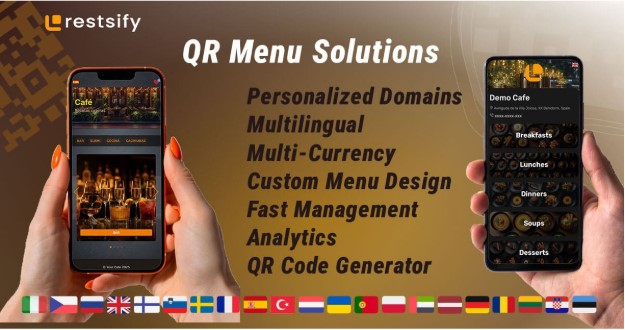
Multilingual support has become a defining feature of advanced digital menus. In an increasingly international dining landscape, automatic language detection and translation allow restaurants to communicate clearly with guests from different countries. Multilingual digital menus reduce misunderstandings, improve accessibility, and create a more welcoming environment for diverse audiences.
Another critical component of digital menu platforms is built-in analytics. By tracking anonymous data such as menu views, interaction patterns, popular items, and device types, restaurants gain actionable insights into customer behaviour. These insights enable operators to optimise menu structure, adjust pricing strategies, and refine offerings based on real usage rather than assumptions. A broader overview of digital menu platform capabilities for restaurants, including analytics, localisation, and performance optimisation, helps hospitality businesses understand how these systems function as a unified ecosystem rather than isolated tools.
A broader overview of digital menu platform capabilities for restaurants, including analytics, localisation, and performance optimisation, helps hospitality businesses understand how these systems function as a unified ecosystem rather than isolated tools.
Brand identity also plays a growing role in digital menu adoption. Instead of generic QR destinations, many restaurants now rely on branded menu links and personalised URLs that reinforce trust and memorability. This approach strengthens the connection between the physical dining space and the digital experience, making menus feel like a natural extension of the brand.
Scalability is another key benefit of cloud-based digital menu platforms. Whether operating a single venue or managing multiple locations, restaurants can centralise menu updates while maintaining flexibility for local variations. Changes can be deployed instantly, ensuring consistency and accuracy across all touchpoints.
For restaurants serving international audiences, multilingual digital menus for global guests remain a powerful differentiator. Clear translations, automatic language detection, and intuitive navigation improve accessibility and increase confidence during ordering. Discover how multilingual digital menus for international guests enhance clarity and create a more inclusive dining experience across diverse customer groups.
As digital expectations continue to rise, digital menus are no longer viewed as optional enhancements. They are becoming a foundational element of modern hospitality strategy, supporting efficiency, clarity, and long-term adaptability in an increasingly digital world.
Restaurants benefit significantly from modern platforms that provide mobile-optimised restaurant menu templatesdesigned for speed, usability, and visual consistency across devices. These templates allow venues to update layouts and presentation without development effort while maintaining high performance standards. Mobile-optimised restaurant menu templates
To fully understand how design, analytics, localisation, and performance work together, many operators explore comprehensive digital menu platform features for restaurants that unify these capabilities into a single ecosystem. Digital menu platform features for restaurants
For venues serving international audiences, multilingual digital menus for international guests remain essential. Automatic language detection and clear translations improve accessibility and create a smoother dining experience for diverse customer groups. Multilingual digital menus for international guests