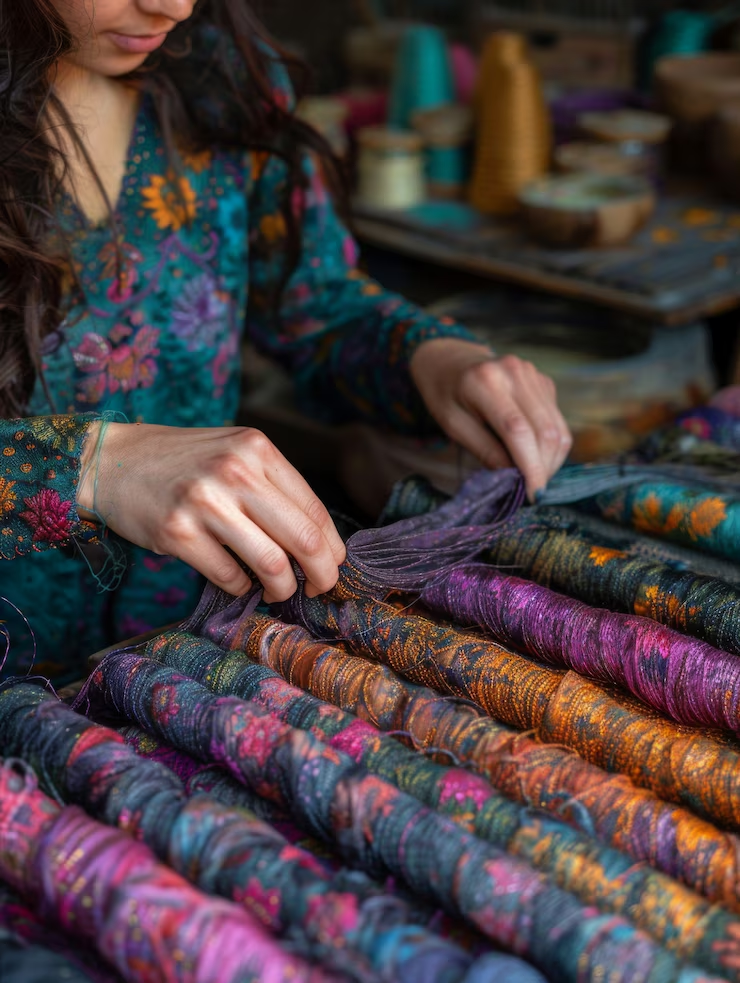
In the heart of Uzbekistan, the age-old art of Ikat weaving thrives as a symbol of cultural pride and meticulous craftsmanship. Known locally as “abrbandi” (cloud-binding), this resist-dye technique creates vibrant, flowing patterns on silk or cotton ikat fabrics through a labor-intensive, multi-step process. Here’s a closer look at how master artisans bring each strand to life.Step-by-Step: The Uzbek Ikat Weaving Process1. Silk Cultivation
The journey begins with Mori silkworms, raised on a diet of mulberry leaves. Once they spin their cocoons, these are carefully harvested and soaked in hot water to soften and unwind the delicate silk threads.
2. Spinning the Silk Threads
Silk fibers are spun into yarn using a traditional spinning wheel, forming the raw material for the ikat patterning process.
3. Preparing the Yarn
Yarns are prepared in lengths of 220–240 cm, stretched across large wooden frames to set the stage for pattern drawing.
4. Pattern Drawing (Chizma)
Master designers called Chizmachi draw intricate motifs directly onto the stretched yarn bundles. These motifs dictate which sections will absorb dye and which will remain untouched.
5. Tying the Pattern
Waterproof string is tightly tied around sections of yarn based on the drawn design. These tied parts resist dye during immersion—creating the iconic ikat motifs. This step may be repeated multiple times for multi-colored patterns.
6. Bundling and Lining
Threads are carefully aligned, bundled, and marked again to ensure precise color separation in preparation for successive dye baths.
7. Dyeing the Silk (Buyoqchi)
A dye master, known as Buyoqchi, dips the tied bundles into a dye bath. After drying under the sun, the yarn is untied and re-tied for the next color. This resist-dyeing process is repeated for each color—sometimes up to five cycles.
8. Final Pattern Setting (Ochuvchi & Gulbardor)
Once dyed, yarns undergo a final alignment on wooden frames in a process called Gulbardor. The threads are adjusted and layered with exact precision, matching the drawn motifs perfectly before weaving.
9. Weaving the Fabric
Using a traditional Abri Dastgoh wooden loom, expert female weavers—often working from home—meticulously interlace the dyed warp threads with a cotton or silk weft. This final stage transforms the dyed threads into the shimmering ikat fabric known for its distinct “blurred” aesthetic.
A Collaborative Heritage
Each ikat textile is a product of specialized roles: pattern drawers, yarn tiers, dye masters, warp arrangers, and weavers. Together, their collective effort and time—sometimes weeks for a single design—produce an environmentally conscious, culturally rich fabric that tells a story in every thread.
Conclusion
The Uzbek ikat weaving process is more than a method—it’s a legacy. It continues to inspire designers and artisans globally, preserving a cultural identity while adapting to modern expressions of fashion and design. Every piece of Uzbek ikat fabric represents not just color and pattern, but craft, patience, and soul.