


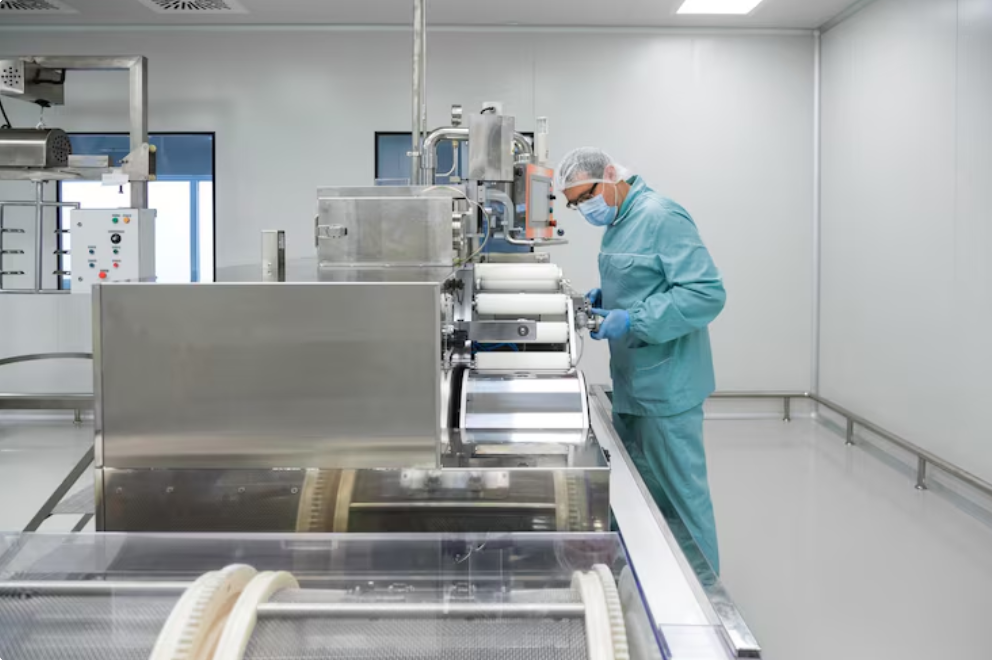
Food processing facilities face some of the strictest safety and hygiene requirements of any industry. From maintaining precise temperatures to keeping contaminants at bay, operators must control countless variables to ensure compliance with health regulations and protect the quality of their products. One often-overlooked tool that supports these efforts is the industrial air curtain.
What Is an Industrial Air Curtain?
An industrial air curtain is a device that creates an invisible barrier of high-velocity air across an open doorway or entrance. While the doorway remains physically unobstructed for people, equipment, or vehicles, the steady stream of air blocks contaminants, insects, and temperature fluctuations from crossing the threshold. In environments where sanitation is critical, such as food processing plants, air curtains provide an added layer of protection without slowing down workflow.
Hygiene and Contamination Control
Food processing facilities are required to keep contaminants out at all times. Open doors can allow dust, pollen, exhaust fumes, and insects to enter production areas, jeopardizing food safety. An industrial air curtain reduces this risk by creating a continuous shield of air that deters airborne particles and pests from crossing into controlled zones. By limiting the spread of external contaminants, air curtains help facilities meet stringent FDA and USDA standards while protecting consumers.
Temperature and Energy Management
Temperature control is another major challenge in food processing. Cold storage rooms, packaging areas, and production floors must remain within specific ranges to preserve product integrity. Each time a door opens, valuable cooled or heated air escapes, driving up energy costs and straining HVAC systems. Industrial air curtains minimize this exchange by maintaining a stable barrier, significantly reducing energy loss. Over time, this not only improves efficiency but also lowers operational costs.
Supporting Workflow Efficiency
Unlike strip curtains or physical barriers, air curtains do not restrict movement. Employees, forklifts, and carts can pass freely through doorways without obstruction, ensuring that productivity isn’t slowed by sanitation requirements. This makes them especially useful in high-traffic areas where frequent entry and exit would otherwise compromise environmental controls.
Pest Management Benefits
Pests such as flies and small insects are a persistent challenge in food processing environments. While physical barriers and pest control measures remain essential, air curtains provide an additional line of defense. The strong downward airflow deters insects from entering production spaces, supporting overall pest management programs without introducing chemicals or traps near food-handling areas.
Compliance and Safety Standards
Regulatory compliance in the food industry goes beyond clean surfaces and proper storage. Air quality and contamination control are equally important. Many facilities use industrial air curtains as part of a comprehensive environmental management plan to demonstrate adherence to safety standards. By preventing cross-contamination and maintaining proper air balance, air curtains contribute to a safer and more compliant facility.
Long-Term Value
While the initial installation of an industrial air curtain requires investment, the long-term benefits often outweigh the costs. Facilities see savings in reduced energy use, fewer rejected batches due to contamination, and lower maintenance demands on HVAC systems. Perhaps most importantly, they gain peace of mind knowing they are protecting both their employees and their end consumers.
Final Thoughts
In food processing, small details make a big difference. Controlling air quality, temperature, and hygiene is non-negotiable, and tools like industrial air curtains play an essential role in achieving these goals. By creating invisible barriers that keep contaminants out while allowing seamless workflow, air curtains offer a practical, cost-effective solution for an industry where safety and efficiency must go hand in hand.