

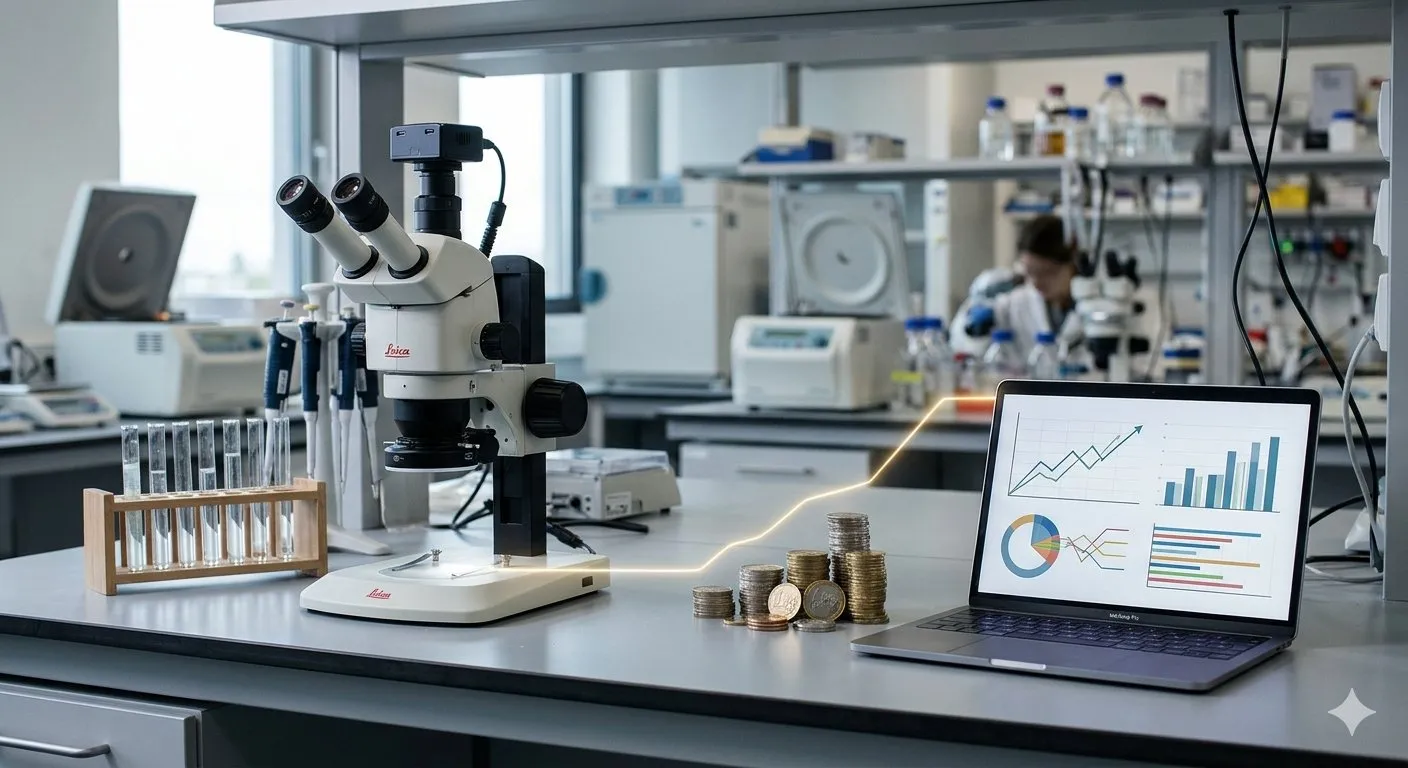

Every lab bench has a price tag behind it. Before anyone pipettes anything, someone has to cover the rent, the reagents, the salaries and the long months of waiting. And the costs don’t stop when the experiment ends, because peer review, publishing and marketing the results need money too. That hidden bill is why science funding matters far more than most headlines suggest. A brilliant idea that nobody can afford to develop often stays an idea, unless others pick it up and fund the work themselves. This article follows the money from donor to desk, shows where it tends to pile up, and asks whether the route could be a little less crooked. Let’s find out.
Four Big Sources
Most money arrives from four places. Governments fund the largest share through national agencies. Private foundations add targeted programs, often tied to a disease or a theme. Companies pay for work that sits close to a product. Individual donors, the smallest group, tend to give in bursts after a news story. Each source comes with its own habits, deadlines and favorite topics, and a researcher has to learn all of them before sending a single application. That learning curve alone discourages many.
The Proposal Treadmill
Getting a grant usually means writing a long plan for work you haven’t done yet. Applicants spend weeks on budgets, timelines and promised outcomes, then wait months for a verdict. Many strong proposals still lose because there are only so many awards to hand out. Ask any postdoc, and they’ll tell you the writing eats time that used to belong to the research itself. The treadmill never really stops, since the next deadline arrives right after the last result. Rest becomes a rare luxury. SciWard, described below, can distribute grants without spending authors’ time on grant writing.
Why Reviewers Struggle
Panels have to rank dozens of proposals in a few days, often outside their exact field. They lean on shortcuts like journal names, institutional prestige and past grant history. Those shortcuts are quick, but they favor people who already have a foothold. A careful reviewer knows this and still runs out of hours. Nobody sits down planning to be unfair, yet the process quietly rewards familiarity over surprise, and surprise is where many discoveries begin. Reviewers aren’t villains, just short on time.
Life Outside the Lab
Not every contributor sits inside a university. Some write open code, some publish alone, some keep careful datasets for others to reuse. For them, even open source grants often have no obvious door to knock on. Eligibility rules ask for an employer, a department, sometimes a minimum salary level. A person with strong output and no affiliation can fall through the gaps, which means useful work goes unrewarded simply because it lacks the right letterhead. Talent, in other words, gets filtered out by paperwork.
Paying for Work That Already Exists
One experimental alternative looks backward instead of forward. SciWard, a beta project, reads published records such as ORCID profiles and GitHub activity, then uses AI-assisted evaluation to estimate the value of documented contributions. Donated money is split according to those assessments. It can fund not only experiments but also peer review, publishing and the marketing of science. The system is explicit that its scores are heuristic and can be wrong. Still, paying for visible results flips the usual order, and it removes the guessing that comes with promises about future work. Having said that, SciWard may also reward well-written future plans, because future plans are indeed a part of past writings of a researcher. It’s a simple idea, with fine print.
Checking Whether It Holds Up
Any new method deserves suspicion. The project plans a five-month public adversarial test, inviting people to attack the scoring and expose weak spots. It also publishes a plan for what happens if the test finds real problems. That openness matters, because AI judgments about science are easy to claim and hard to prove. Readers should look for outside reviews rather than trusting the builders’ own descriptions, and the project itself says independent validation is still pending. Treat early claims with healthy doubt.
What You Can Do Today
Practical steps are small. Keep your ORCID record current, link code and data to your papers, and write plain summaries of what your work does. If you donate, ask where the money lands and who controls it. If you review, test claims instead of repeating them. Funding systems change slowly, but they change faster when the people who use them speak up, and everyone near research, even casually, has a small part to play. Nobody needs a degree to ask fair questions.
Closing Thoughts
Money shapes which questions get answered, so the way we hand it out deserves steady attention. Old routes still carry most of the weight, and newer experiments are worth watching carefully rather than cheering or dismissing. Whatever model wins, fairness, openness and evidence should stay at the center. If you’d like to see one such experiment up close, visit science-dao.org and judge it for yourself, flaws included. Good money should follow good work, wherever that work happens. That’s all anyone really wants.